
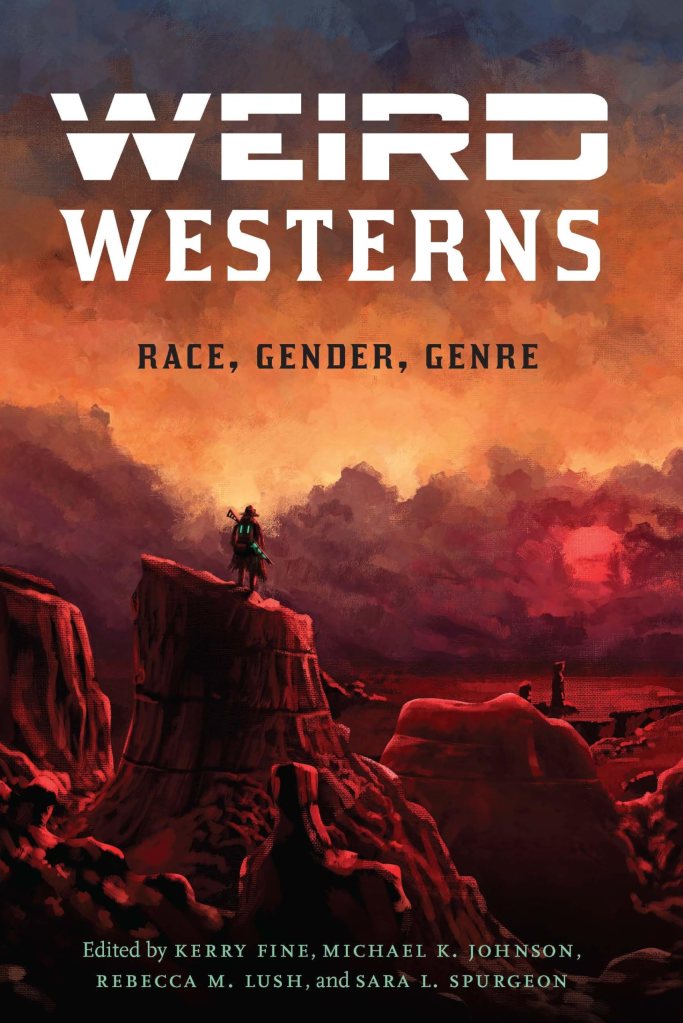
2021 Top Ten Finalist for the Locus Awards in Nonfiction
Joshua Smith’s chapter “Uncle Tom’s Cabin Showdown” won the 2021 Don D. Walker Prize from the Western Literature Association
Weird Westerns is an exploration of the hybrid western genre—an increasingly popular and visible form that mixes western themes, iconography, settings, and conventions with elements drawn from other genres, such as science fiction, horror, and fantasy. Despite frequent declarations of the western’s death, the genre is now defined in part by its zombie-like ability to survive in American popular culture in weird, reanimated, and reassembled forms.
The essays in Weird Westerns analyze a wide range of texts, including those by Native American authors Stephen Graham Jones (Blackfeet) and William Sanders (Cherokee); the cult television series Firefly and The Walking Dead; the mainstream feature films Suicide Squad and Django Unchained; the avant-garde and bizarre fiction of Joe R. Lansdale; the tabletop roleplaying game Deadlands: The Weird West; and the comic book series Wynonna Earp.
The essays explore how these weird westerns challenge conventional representations by destabilizing or subverting the centrality of the heterosexual, white, male hero but also often surprisingly reinforce existing paradigms in their inability to imagine an existence outside of colonial frameworks.
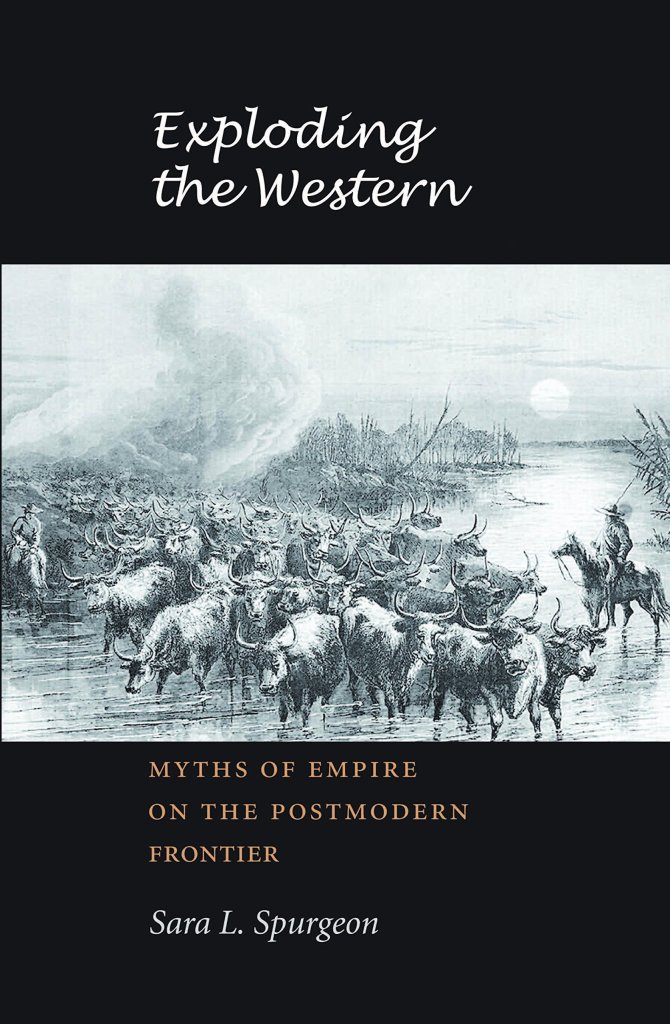
The frontier and Western expansionism are so quintessentially a part of American history that the literature of the West and Southwest is in some senses the least regional and the most national literature of all. The frontier—the place where cultures meet and rewrite themselves upon each other’s texts—continues to energize writers whose fiction evokes, destroys, and rebuilds the myth in ways that attract popular audiences and critics alike. Sara L. Spurgeon focuses on three writers whose works not only exemplify the kind of engagement with the theme of the frontier that modern authors make, but also show the range of cultural voices that are present in Southwestern literature: Cormac McCarthy, Leslie Marmon Silko, and Ana Castillo. Her central purposes are to consider how the differing versions of the Western “mythic” tales are being recast in a globalized world and to examine the ways in which they challenge and accommodate increasingly fluid and even dangerous racial, cultural, and international borders. In Spurgeon’s analysis, the spaces in which the works of these three writers collide offer some sharply differentiated visions but also create new and unsuspected forms, providing the most startling insights. Sometimes beautiful, sometimes tragic, the new myths are the expressions of the larger culture from which they spring, both a projection onto a troubled and troubling past and an insistent, prophetic vision of a shared future.
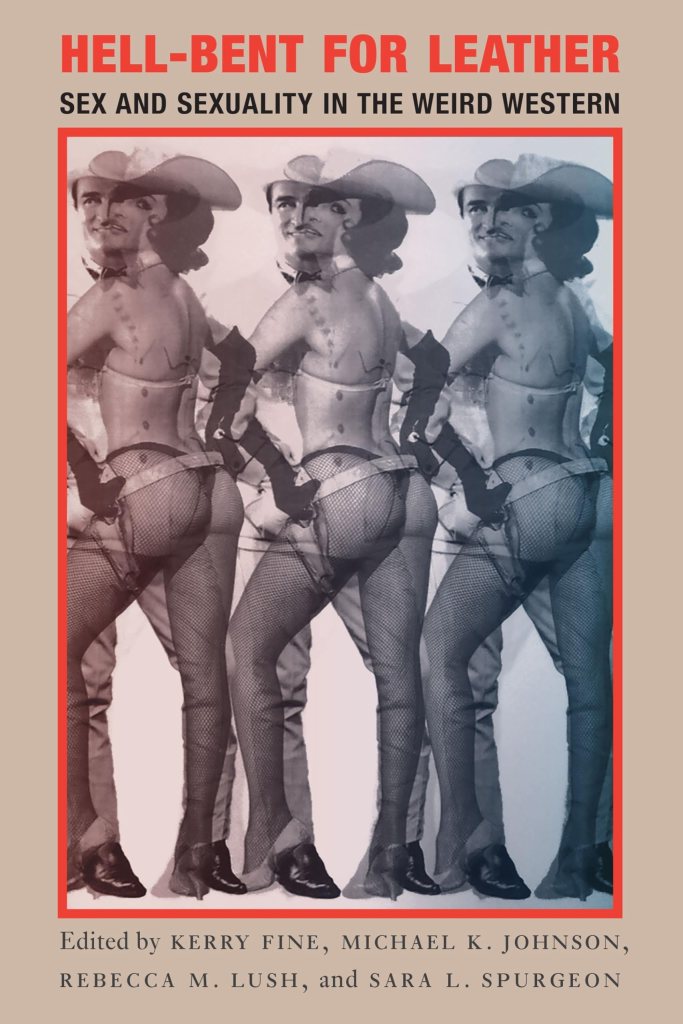
Hell-Bent for Leather: Sex and Sexuality in the Weird Western builds on the Locus Award finalist Weird Westerns: Race, Gender, Genre. This new collection takes a deep dive into the myriad ways sex and sexuality are imagined in weird western literature, film, television, and video games, paying special attention to portrayals of power and privilege. The contributors explore weird western challenges to assumptions about varied genders and sexualities, drawing our attention to how the western can reinforce existing gender and sexual paradigms or overturn them in delightful, terrifying, or unexpected ways.
Primary texts range from CBS’s campy BDSM-inflected steampunk western The Wild Wild West to the Star Wars franchise’s popular leather-daddy bounty hunter The Mandalorian, from Ishmael Reed’s satirical postmodern western Yellow Back Radio Broke-Down to C Pam Zhang’s acclaimed novel How Much of These Hills Is Gold. Chapters engage texts from Australia and Great Britain, classic horror like The Texas Chain Saw Massacre, the popular video games BioShock Infinite and The Last of Us II, and less well-known texts like Laguna Pueblo–Navajo author A. A. Carr’s erotic vampire/monster slayer western Eye Killers.
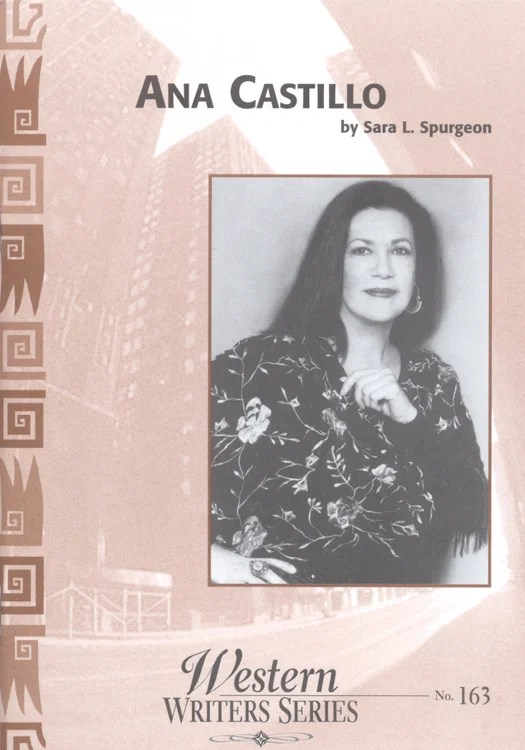
It may seem odd to call Ana Castillo a western writer, considering she has lived most of her life in Chicago. Geographically, this city would not generally qualify as “western.” But the images, tensions, and themes that drive Castillo’s work are the same that currently challenge traditional definitions of the “west” as a place bounded strictly by geography. Historically, of course, Chicago at one time imagined itself as the prototypical western city, but the frontier moved on, and with it the American notion of what the west was, where it was located, what it looked like, and who inhabited it. Frontiers, in fact, have traditionally been vital in determining what Americans consider the west. From the perspective of Anglo New England, it was what Daniel Boone was traversing in the wilds of Kentucky. Later it was the Great Plains, the Rocky Mountains, the deserts of Nevada, the U.S.-Mexican borderlands. California? Maybe yes, maybe no. Some argue it is the least “western” of the western states despite its location; others insist it is the most western because of everything but its longitude.
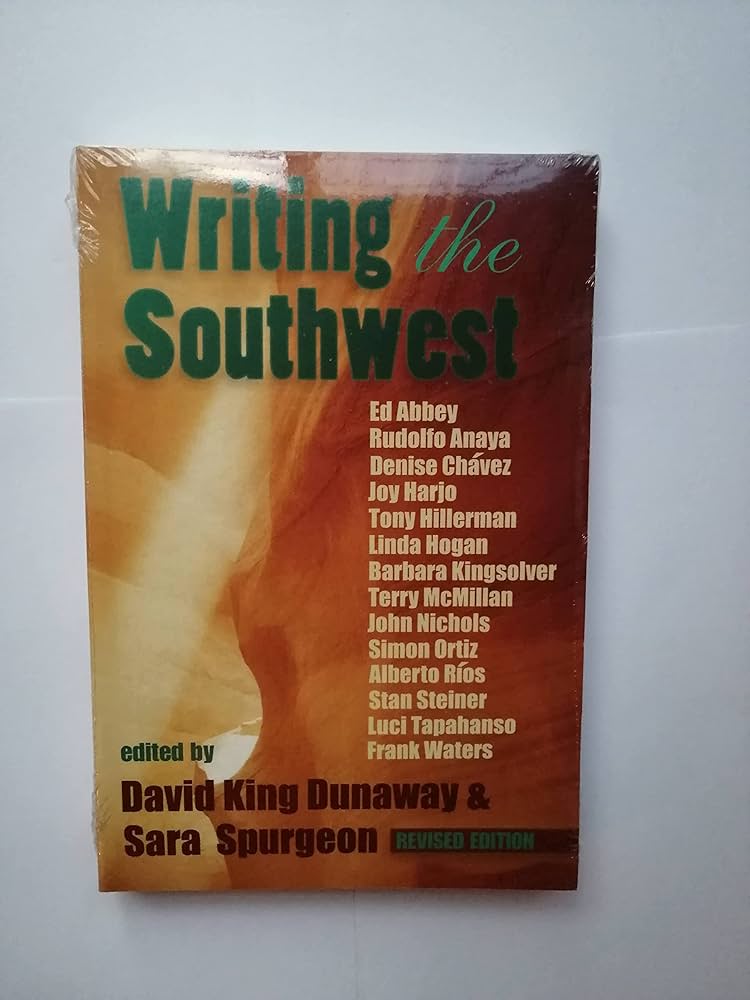
First published in 1995, this assemblage of interviews, bibliographies, excerpts, and criticism on fourteen of the Southwest’s most important authors has been updated and expanded. The accompanying 74-minute compact disc provides excerpts from the authors. Tony Hillerman discusses how blindness in the army helped shape his writings; Terry McMillan explains her start as a writer and why she thought, when she was young, that African-Americans didn’t write books. Each recorded interview ranges from 4 to 10 minutes.
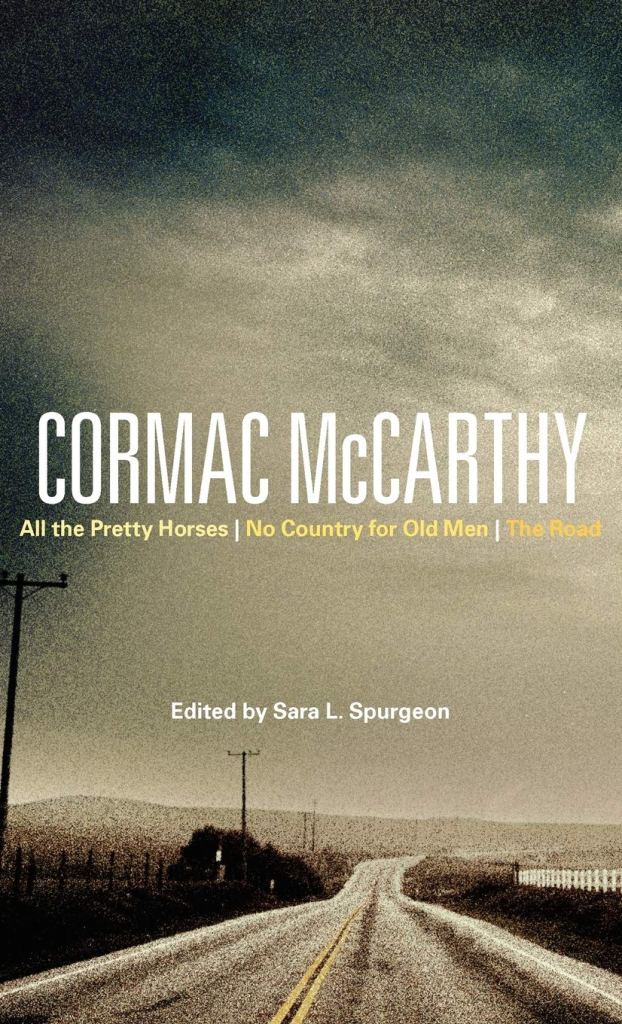
A collection of original, stimulating interpretations of key texts by Cormac McCarthy, designed for students and edited and written by leading scholars in the field.
 Sara Spurgeon